What Is Poker Face? A Beginner's Guide to Hiding Your Hand
What Is Poker Face? The Short Answer
If you've ever asked what is poker face, the answer is simple: it's the neutral expression and body language you keep at the table so other players can't guess whether you're holding a monster hand or a bluff. You do it by relaxing your face, controlling your breathing, and avoiding sudden movements that leak information. A good poker face doesn't guarantee wins, but it removes one way opponents can read you.
In Philippine home games and casino rooms, the term is used loosely for any calm, unreadable demeanor — not just the face. Think of it as your table presence: eyes steady, mouth relaxed, hands still, and reactions the same whether you win a small pot or fold junk.
Step-by-Step: How to Build a Poker Face
Here's a practical checklist you can run through before every session. Treat it like warming up before a basketball game — repetitive, but it works.
- Set your baseline expression. Practice in a mirror: a soft mouth, relaxed jaw, and eyes that look at the felt or at opponents without staring. The goal is a default look you can hold for hours.
- Control your breathing. Breathe through your nose at a steady count — four seconds in, four seconds out. Shallow breathing tightens your face and makes you look nervous.
- Slow your movements. Chips go in the same way whether you're betting 20 or 2,000. Avoid snap-calling or snap-folding; take a two-second pause before every action.
- Keep your hands busy but quiet. Rest them on the rail or hold a chip stack. Fidgeting, tapping, or covering your mouth draws attention.
- Practice a ‘same reaction’ rule. When the flop comes, when you win, when you lose — react as if nothing happened. This is the heart of a solid poker face.
- Test it in low-stakes games. Start at a ₱10/₱20 table or a home game. Ask a friend to watch you and note any twitch or smile you can't feel.
Do this for 10 minutes before each session and you'll build a habit within two weeks.
Why a Poker Face Matters (Even in Low-Stakes Games)
Every piece of information you give away is a free edge to your opponent. If you smile when you hit a flush, a regular will fold to your big bets and call your bluffs. That costs you money in the long run — not because the cards are rigged, but because you're readable.
In the Philippines, where many games are social and chatty, a calm face stands out. Players often rely on conversation and reactions to decide. If you're the one person who doesn't change expression after a bad beat, you become harder to exploit. That's the real value: you force opponents to guess, and guessing is where they make mistakes.
Your face is not a tell if it never changes. It's the sudden change — the smile, the sigh, the eye roll — that gives you away.
Common Mistakes That Break a Poker Face
Most beginners lose their poker face without realising it. Here are the usual culprits and how to fix them.
1. Reacting to the flop
When the community cards come out, players instinctively lean forward or check their chips. Fix: decide before the flop how you'll sit — lean back, hands still — and hold it regardless of what falls.
2. Talking too much
Nervous chatter is a tell. If you're bluffing, you might talk faster; if you have the nuts, you might go quiet. Fix: stick to short, neutral replies and let your betting do the talking.
3. Timing tells
Instant calls often mean a draw; long tanks mean a tough decision. Fix: use a consistent pause — count to two — before every action, including folds.
4. Covering your mouth or face
This is a classic nervous habit, and it screams weakness. Fix: keep your hands below your chin, resting on the table edge.
5. Celebrating small wins
A fist pump after winning a ₱500 pot tells everyone you had a strong hand. Fix: stack your chips quietly and move on.
When to Use a Poker Face — and When It Doesn't Matter
A poker face matters most in live cash games and tournaments where opponents can see you. It matters less online, where no one sees your face, though timing tells still exist. In a home game with friends who know you well, your face is under more scrutiny — they'll notice your habits faster than strangers will.
Use a poker face when:
- You're in a hand with observant players who adjust to your reactions.
- You're bluffing and want to look strong.
- You've hit a monster and want to look weak.
- You're in a tournament with a camera or a crowd.
It's less critical when you're playing against beginners who only look at their own cards, or in fast-fold online games. But building the habit early saves you from leaking information later.
A Worked Example: The ₱5,000 Bluff
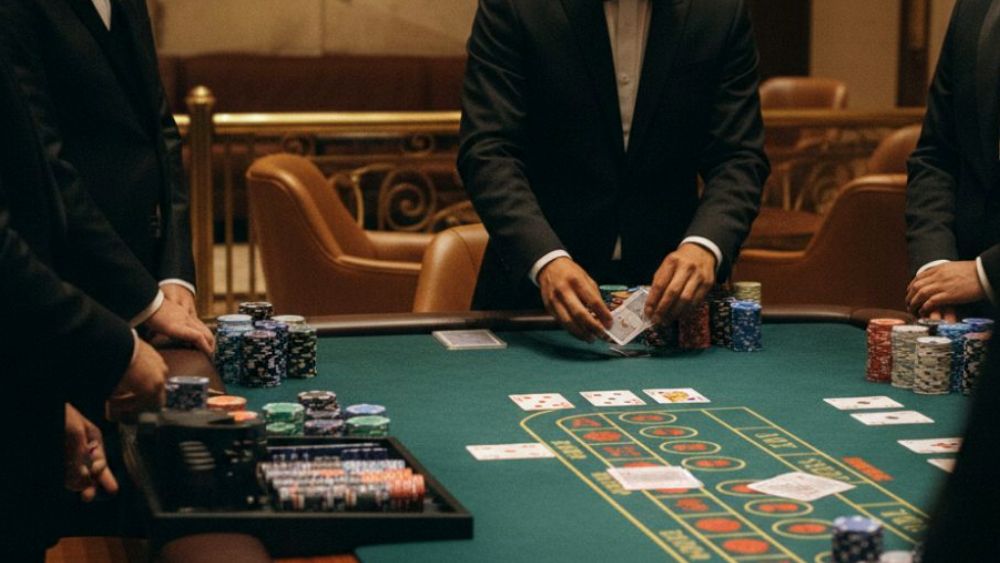
Imagine a ₱10/₱20 cash game at a Metro Manila card room. You're on the button with 7♠8♠ and the board reads A♥K♦2♣9♠. You've missed everything. Your opponent, a regular who watches everything, checks. You decide to bluff ₱1,500 into a ₱2,000 pot.
If you shove your chips forward quickly and stare at the flop, he'll read strength — or nervousness. Instead, you pause for two seconds, breathe out, and slide the chips in with a relaxed face. You keep your eyes on the pot, not on him. He tanks, then folds. The bluff works not because of the cards, but because your poker face gave him nothing to call with.
Now reverse it: you flop a set and want a call. Same pause, same relaxed face, same chip motion. He calls because you look the same as when you bluff. That consistency is the whole skill.
Poker Face vs. Tells: What's the Difference?
A poker face is what you show; a tell is what you leak. You control the first; opponents look for the second. Common tells include:
- Rapid blinking when bluffing
- Checking hole cards again after a strong flop
- Reaching for chips before it's your turn
- Sudden stillness after a big bet
Your job is to eliminate your own tells and watch for others'. A good poker face doesn't mean freezing like a statue — it means keeping your baseline steady so any deviation is meaningless.
Practice Drill: The Two-Minute Mirror Check
Before your next session, do this drill twice a day for a week.
- Stand in front of a mirror and deal yourself two hole cards.
- Look at them with a relaxed face for five seconds. Note any eyebrow movement or mouth twitch.
- Imagine a flop that gives you a strong hand; hold the same face.
- Imagine a flop that gives you nothing; hold the same face.
- Repeat until the three faces look identical.
Then ask a friend to watch you for two minutes and guess which scenario you're imagining. If they can't tell, you're ready for the table.
Final Table Checklist for Filipino Players
Bring this checklist to every live session:
- Arrive early and take three deep breaths before sitting.
- Decide your default posture: back straight, hands on rail.
- Use the two-second pause before every action.
- Avoid talking about your hand or the board.
- React the same to wins and losses.
- After the session, note any moments you felt your face slip.
A poker face is a habit, not a talent. Build it deliberately and it becomes automatic — the same way you learn to shuffle chips without looking.
Frequently Asked Questions
What is a poker face in simple terms?
It's the neutral expression and body language you keep at the table so other players can't tell whether you're strong or bluffing. You relax your face, control your breathing, and avoid sudden reactions.
Does a poker face actually help in low-stakes games?
Yes. Even beginners pick up on smiles, sighs, and fast calls. A steady face forces them to guess, and guessing leads to mistakes you can profit from.
How long does it take to build a poker face?
With daily mirror practice and two-second pauses in live games, most players see improvement in two to three weeks. Consistency matters more than natural talent.
Can I have a poker face online?
Online, no one sees your face, but timing tells still exist. Use the same two-second pause before every action and avoid instant calls or folds.